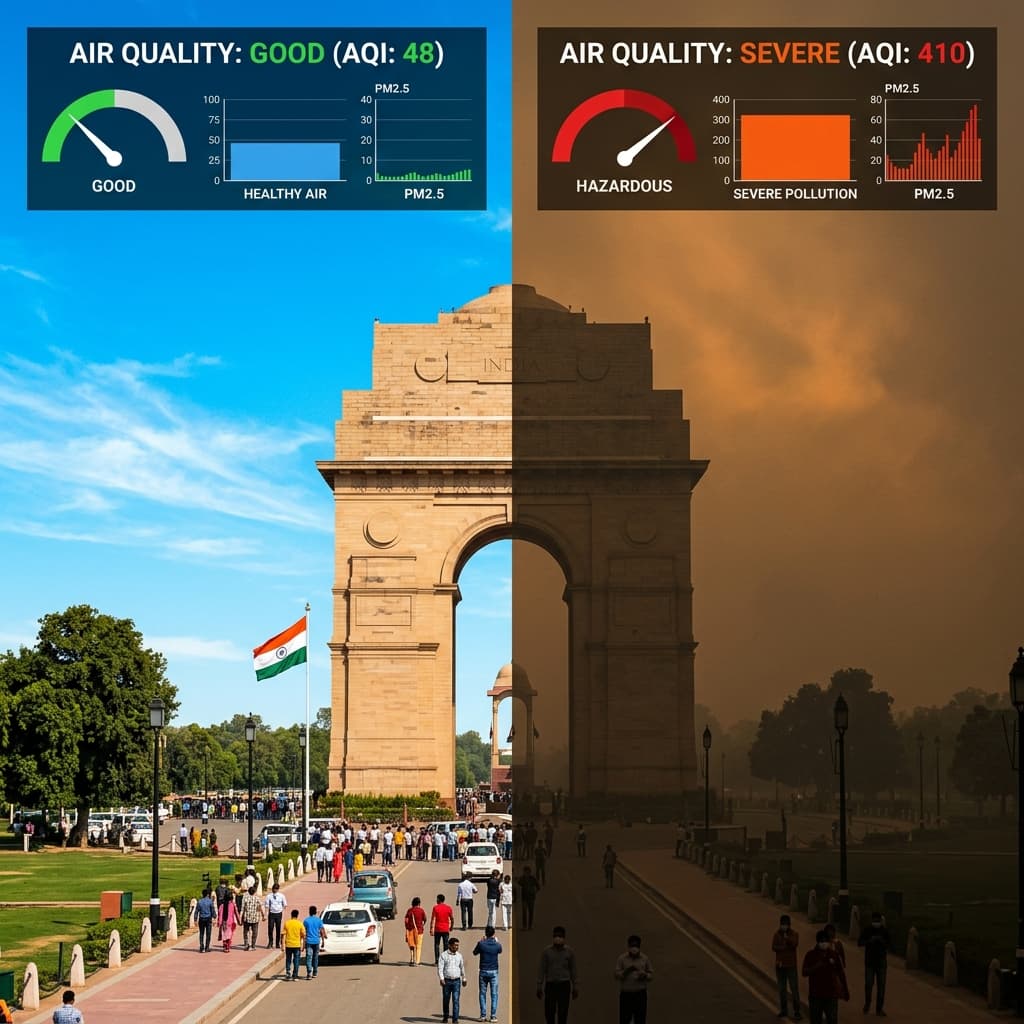
Delhi Air Quality 2026 vs 6-Year Historical PM2.5 Data
Decoding Delhi's PM2.5 Narrative
Delhi's battle with particulate matter is well-documented, but looking at data in isolation often misses the broader trend. In this comprehensive comparison, we stack the recorded PM2.5 levels of 2026 against the historical averages from 2020 through 2025 to determine if municipal strategies are delivering real atmospheric change.
Historical PM2.5 Averages (2020–2025) vs 2026 Actuals
When we look at the monthly average concentrations (measured in µg/m³), we see a distinct trend pattern. The historical baseline shows a drop in particulate levels during the summer monsoon months, followed by an aggressive spike in late autumn. Here is how 2026 compares:
- 2020–2022 Average: Summer PM2.5 averaged 75 µg/m³; Winter peaks reached up to 280 µg/m³.
- 2023–2025 Average: Summer PM2.5 dropped slightly to 68 µg/m³; Winter peaks hovered around 245 µg/m³.
- 2026 Year-to-Date: Summer averages stand at 59 µg/m³, indicating a noticeable 15% reduction in warm-season baseline dust.
Factors Contributing to the 2026 Decline
Climatologists and policy researchers point to three major initiatives that helped suppress PM2.5 accumulation in the first half of 2026:
- Electrification of public transport networks, with over 75% of transit buses now running on battery power.
- Strict municipal dust-control mandates enforced at construction sites, backed by regular water spraying schedules.
- Favorable wind dispersion corridors created by green belt expansions along major highway boundaries.
The Looming Winter Challenge
While the spring and summer numbers of 2026 bring hope, the true test lies in the upcoming post-harvest seasons. Atmospheric stagnation, stubble burning residues, and low wind speeds during winter have historically erased warm-season gains within a matter of days. A vigilant application of the Graded Response Action Plan (GRAP) will remain crucial to maintaining this positive trend.